Source granite pcd engraving bit for Stone, Ceramic, and Concrete
Find 30 verified listings for granite pcd engraving bit designed for stone, ceramic, and concrete applications. Compare specifications, prices, and supplier capabilities to identify the right tool for your masonry or engraving projects.
Key considerations
Products List
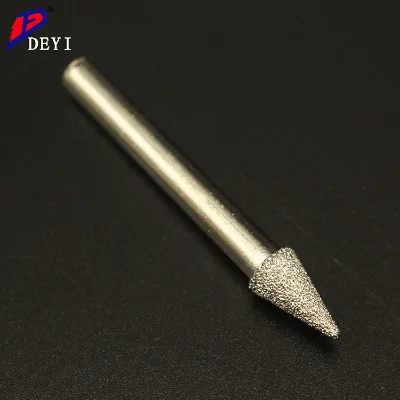


Comprehensive Sourcing Guide
Strategic Sourcing Guide for Granite PCD Engraving Bits
Understanding Technical Specifications and Material Composition
When sourcing granite PCD (Polycrystalline Diamond) engraving bits, the primary focus must be on the precise alignment between the tool's physical attributes and the specific demands of the granite processing environment. The market offers a diverse array of configurations, but the core material remains consistent: diamond. This abrasive material is essential for cutting through the high hardness of granite, marble, and similar stone composites. Buyers must verify that the product description explicitly states the material composition as diamond, as this is the defining characteristic of the tool's cutting capability.
The physical dimensions of the bit are critical for compatibility with CNC routers and engraving machines. Specifications often vary significantly between suppliers, with length options ranging from 60mm to over 200mm, and specific diameters such as 6mm being common for detailed work. The overall length is not merely a dimension but a factor in the tool's rigidity and the depth of the cut achievable in a single pass. For instance, some listings indicate lengths of 60mm, 90mm, and 120mm, while others suggest a broader range of 20mm to 45mm for core drilling applications. It is imperative for the buyer to confirm the exact length required for their specific machine setup, as the shank diameter and overall length must match the tool holder specifications to prevent vibration or breakage during high-speed operation.
Furthermore, the grit size and the specific standard of the diamond segment play a pivotal role in performance. While some product data references standards such as D5, D6, D10, D12, D16, and up to D50, others mention specific grits like D7, D9, D11, and D13. These designations often relate to the diamond concentration or the specific segment geometry designed for different stone densities. A buyer must not assume that a "D10" standard from one supplier performs identically to a "D10" from another without verifying the actual diamond grit size and bond hardness. The application field is equally broad, covering stone, ceramic, concrete, fiberboard, and crystal glass, but the bit must be selected specifically for the hardness of the granite being processed to ensure optimal cutting speed and tool life.
Compliance, Certification, and Standard Verification
In the B2B procurement of industrial cutting tools, compliance with international standards is a non-negotiable aspect of quality assurance. While specific certification documents may not always be visible in a product listing, buyers must demand evidence that the manufacturing process adheres to recognized quality frameworks. The industry often references standards such as ISO2000 for usage in granite or wall drilling, which serves as a benchmark for the tool's intended application and safety profile. However, the absence of a visible certification badge on a product page does not imply non-compliance; rather, it necessitates a direct inquiry to the supplier regarding their quality management systems.
Buyers should verify the origin of the product, as the place of origin often correlates with the manufacturing standards employed. Products originating from major industrial hubs like Beijing, China, are common in this sector, but the specific factory's adherence to safety and quality protocols varies. The "Standard_ISO2000" mentioned in some contexts suggests a focus on specific usage scenarios, but buyers must confirm if this standard applies to the specific model number, such as VTD-01 or VTD-03, or the DY-EH355 series. It is crucial to distinguish between marketing claims and verified standards. The buyer should request a copy of the test reports or quality certificates that validate the tool's performance against the stated standards before placing a bulk order.
Additionally, the customization capabilities of the supplier must be evaluated against compliance requirements. Many suppliers offer "Customized" options for packing, dimensions, and even the diamond segment specifications. While customization is a significant advantage, it introduces variables that must be strictly controlled. If a buyer requests a custom standard or a non-standard grit size, the supplier must demonstrate that they can maintain the necessary tolerances and material integrity. The "prod_standard" field often lists a range of diameters or segment types, but the buyer must ensure that the customized order falls within the manufacturer's verified production capabilities. Failure to verify these standards can lead to tools that fail prematurely or cause damage to expensive CNC machinery.
Cost Drivers and Pricing Structure Analysis
The pricing of granite engraving bits is influenced by a complex interplay of factors, including material costs, manufacturing complexity, and order volume. The observed price range in the market can vary significantly, with some listings showing prices as low as $1 and others reaching up to $42 per unit. This wide disparity is not necessarily an indicator of quality but rather a reflection of the specific product configuration, such as the length, the type of diamond bond, and the packaging. Buyers must be cautious not to equate the lowest price with the best value, as the cost of a tool is directly tied to its expected lifespan and cutting efficiency.
The Minimum Order Quantity (MOQ) is a primary driver of the unit cost. Suppliers often have tiered pricing structures where the MOQ ranges from 10 pieces to 100 pieces. For instance, some listings indicate an MOQ of 100 pieces, while others may accept orders as low as 10 pieces. This variation allows buyers to manage their initial investment and inventory risk. However, purchasing at the lower end of the MOQ spectrum often results in a higher per-unit cost. Conversely, larger orders typically unlock better pricing but require a higher upfront capital outlay. The "Selling Units" are often listed as "Single item," which can be misleading if the MOQ is not clearly defined in the terms and conditions.
Another significant cost driver is the customization factor. Suppliers that support "Customized" packing, dimensions, or specific diamond standards often charge a premium for these services. The "Sample Cost" is another consideration; while some suppliers offer free samples to demonstrate quality, others may charge for the sample production time, which typically ranges from 5 to 7 days. The "Bulk Order Time" can also impact the overall cost, as expedited production or rush orders may incur additional fees. Buyers should analyze the total cost of ownership, which includes the purchase price, shipping costs, and the potential cost of tool failure, rather than focusing solely on the initial unit price.
Typical Applications and Performance Expectations
Granite PCD engraving bits are designed for a wide range of industrial applications, primarily centered around stone processing. The "Application" field frequently lists stone engraving, masonry drilling, and work with materials such as ceramic, concrete, and crystal glass. The specific performance expectations depend heavily on the application. For example, bits used for "Carving" require a different geometry and diamond concentration compared to those used for "Core Drill" applications. The "Type" of the bit, whether it is an engraving bit or a core drill bit, dictates its suitability for the task.
The "Advantage" of these tools often includes "Fast Cutting Speed," which is a critical metric for production efficiency. However, the actual cutting speed is influenced by the machine's RPM, the feed rate, and the hardness of the granite. Buyers should verify that the tool is optimized for the specific type of granite they are processing, as different granite varieties have varying mineral compositions that affect cutting performance. The "Application Field" also extends to fiberboard and other composite materials, but the primary use case remains stone engraving and drilling.
It is important to note that while the product descriptions may claim versatility, the actual performance can vary based on the specific model number. For instance, the DY-09 model might be optimized for a different application than the VTD-03 model. Buyers should consult the technical data sheets for each model to understand its specific capabilities. The "Usage" field often specifies "Masonry Drilling," which implies the tool is designed for high-impact applications. However, for precision engraving, the tool must maintain a high level of stability and sharpness. The "Production capacity" of the supplier, such as 10,000 pieces per day, can also indicate their ability to meet high-volume demands without compromising on the consistency of the product.
Supplier Evaluation and Production Capacity
Evaluating a supplier for granite PCD engraving bits requires a thorough assessment of their production capabilities, industry experience, and logistical reliability. The "Industry Experience" of the supplier is a key indicator of their expertise; listings often mention 8 years of experience, which suggests a mature understanding of the manufacturing process and the ability to handle complex customization requests. However, experience alone is not sufficient; buyers must verify the supplier's "Production capacity" and "Supply Ability." Some suppliers claim a capacity of 10,000 pieces per day, while others list a supply ability of 1,000 pieces per day. This discrepancy highlights the need for buyers to confirm the actual capacity that can be allocated to their specific order.
The "Place of Origin" and "Port of Dispatch" are also critical factors in supplier evaluation. Products originating from Beijing, China, and dispatched from Tianjin are common, but buyers should verify the logistics chain to ensure timely delivery. The "Delivery Term" options, such as FOB, CNF, CIF, and EXW, provide flexibility in managing shipping and insurance costs. Buyers must understand the implications of each term to avoid unexpected expenses. The "Production time" of 5-7 days for samples and 20-25 days for bulk orders is a standard timeframe, but buyers should confirm if these timelines are consistent with the supplier's current workload.
Furthermore, the "Customization" capabilities of the supplier should be evaluated in the context of their quality control processes. Suppliers that offer "Customized" packing and dimensions must have the flexibility to adjust their production lines without compromising quality. The "Packaging Details," which may include inner boxes, outer boxes, or blister cards, are essential for protecting the tools during transit. Buyers should ensure that the packaging is robust enough to prevent damage, especially for delicate diamond-tipped tools. The "Single gross weight" of 0.03 kg per item is a useful metric for calculating shipping costs, but the total weight of the shipment must be considered for logistics planning.
Quality Control and Long-Term Procurement Considerations
Quality control is the cornerstone of successful procurement for industrial cutting tools. Buyers must implement a rigorous inspection process to ensure that the received products meet the specified standards. The "Sample Production Time" of 5-7 days offers an opportunity for buyers to test the product's performance before committing to a bulk order. During this phase, buyers should evaluate the tool's cutting speed, durability, and consistency. The "Sample Cost" being free in some cases is an advantage, but buyers should still verify the quality of the sample against their specific requirements.
Long-term procurement considerations involve building a sustainable relationship with the supplier. The "Payment Term" of 30% advance and 70% balance is a common arrangement that balances risk for both parties. However, buyers should negotiate terms that align with their cash flow and risk tolerance. The "Bulk Order Time" of 20-25 days indicates the lead time for large quantities, which buyers must factor into their production planning. Consistency in product quality is paramount; a single batch of defective tools can halt production and result in significant financial losses.
Buyers should also consider the "Customized" nature of the product as a long-term strategy. As their needs evolve, the ability to request custom dimensions, grit sizes, or packaging can provide a competitive advantage. However, this requires a supplier with the technical expertise to maintain quality across different specifications. The "Standard" of the product, whether it is D5, D6, or D10, should be consistent across all orders to ensure predictable performance. Finally, buyers should maintain open communication with the supplier regarding any changes in their production requirements or market conditions to ensure a seamless supply chain.
Comparative Analysis of Product Attributes
To facilitate informed decision-making, the following table summarizes key attributes observed in the market for granite PCD engraving bits. This comparison highlights the variability in specifications and helps buyers identify the most suitable options for their needs.
| Attribute | Observation Range / Specific Values | Relevance to Buyer |
|---|---|---|
| Material | Diamond | Essential for cutting granite; must be verified. |
| Size (Diameter) | 6mm (common), 10-100mm (range) | Determines compatibility with CNC tools. |
| Length | 20mm-45mm, 60mm-200mm, 60/90/120mm | Affects rigidity and cutting depth. |
| MOQ | 10 pcs to 100 pcs | Influences unit cost and inventory management. |
| Production Time | 5-7 days (Sample), 20-25 days (Bulk) | Critical for supply chain planning. |
| Origin | Beijing, China | Indicates manufacturing hub and potential standards. |
| Packaging | PP bag, Blister card, Carton Box, Custom | Protects tools during shipping; affects cost. |
| Application | Stone, Ceramic, Concrete, Glass | Ensures tool suitability for specific materials. |
| Standard | D5-D50, D7-D13, ISO2000 | Benchmark for quality and performance. |
| Payment Terms | 30% Advance, 70% Balance | Standard financial arrangement for B2B. |
This table underscores the importance of verifying specific details rather than relying on general categories. The variability in length, standard, and MOQ requires a tailored approach to sourcing, ensuring that the selected product aligns perfectly with the buyer's operational requirements. By carefully analyzing these attributes, buyers can mitigate risks and secure high-quality granite PCD engraving bits that enhance their production efficiency.
FAQs
What is the minimum order quantity for these diamond bits?
The minimum order quantity is 10 pieces, though some listings specify 100 pieces. Buyers should verify the specific MOQ per supplier, as it ranges from 10 to 100 depending on the model and customization needs.
How long does it take to produce a bulk order?
Bulk order production time typically ranges from 20 to 25 days. Sample production takes 5 to 7 days, and the supplier claims a daily supply ability of 1000 pieces for standard orders.
Which materials can these engraving bits cut effectively?
These bits are designed for stone, ceramic, concrete, fiberboard, and crystal glass. They are specifically optimized for stone engraving and masonry drilling applications using diamond material.
Can the product dimensions be customized for specific machines?
Yes, customization is available for length and packing details. Overall lengths can range from 20mm to 200mm, and packaging can be adjusted to inner boxes, outer boxes, or blister cards.
What is the origin and shipping port for these tools?
The place of origin is Beijing, China, and the port of dispatch is Tianjin. Products are shipped via FOB, CNF, CIF, or EXW terms with a production capacity of 10,000 pieces per day.
What standards apply to the diamond segment specifications?
Standards include D5, D6, D10, D12, D16 up to D50, as well as D7, D9, D11, and D13. These designations relate to diamond concentration and segment geometry for different stone densities.